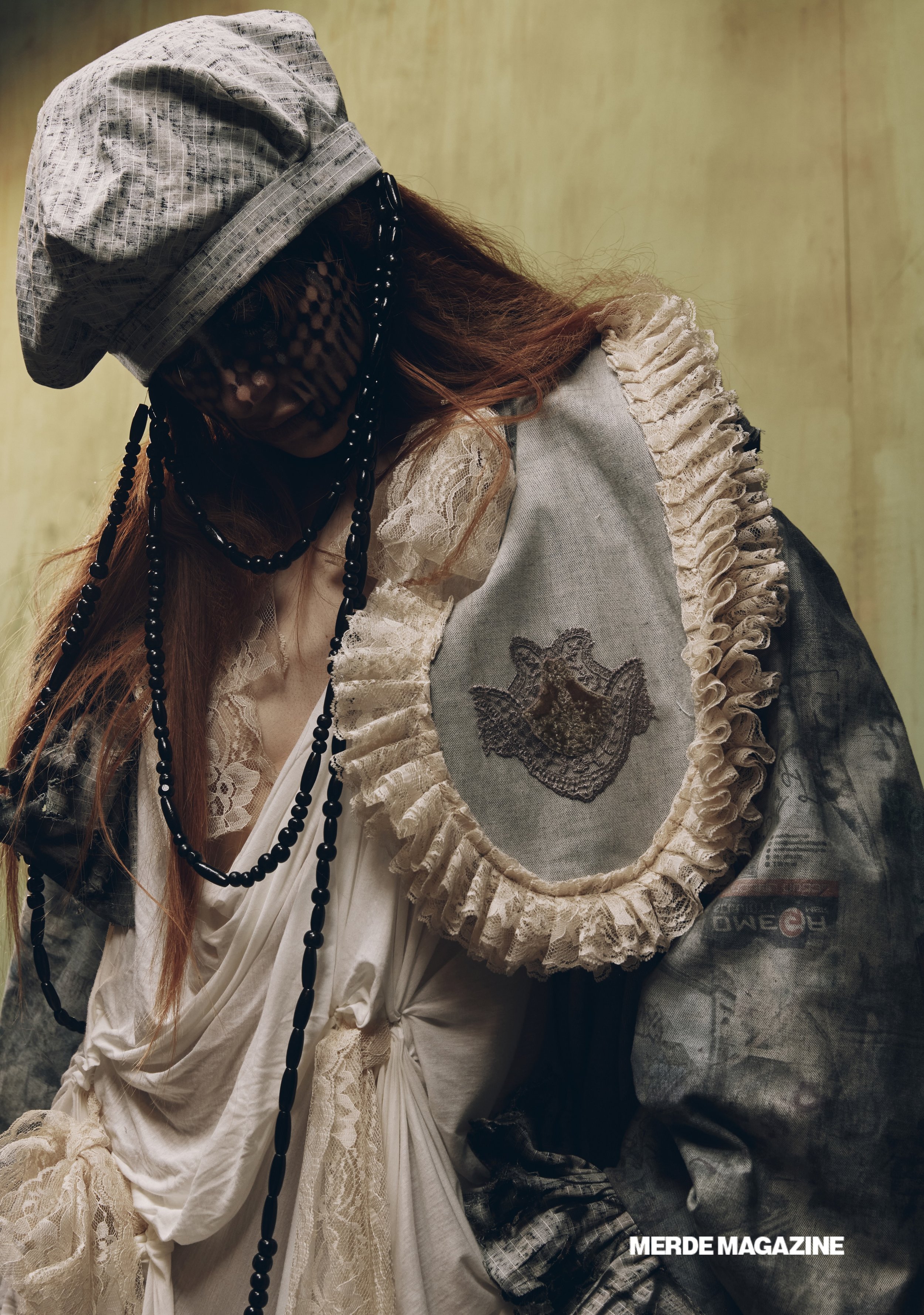
Fight or Flight, Designer Spotlight: Elisabed Amiredjibi
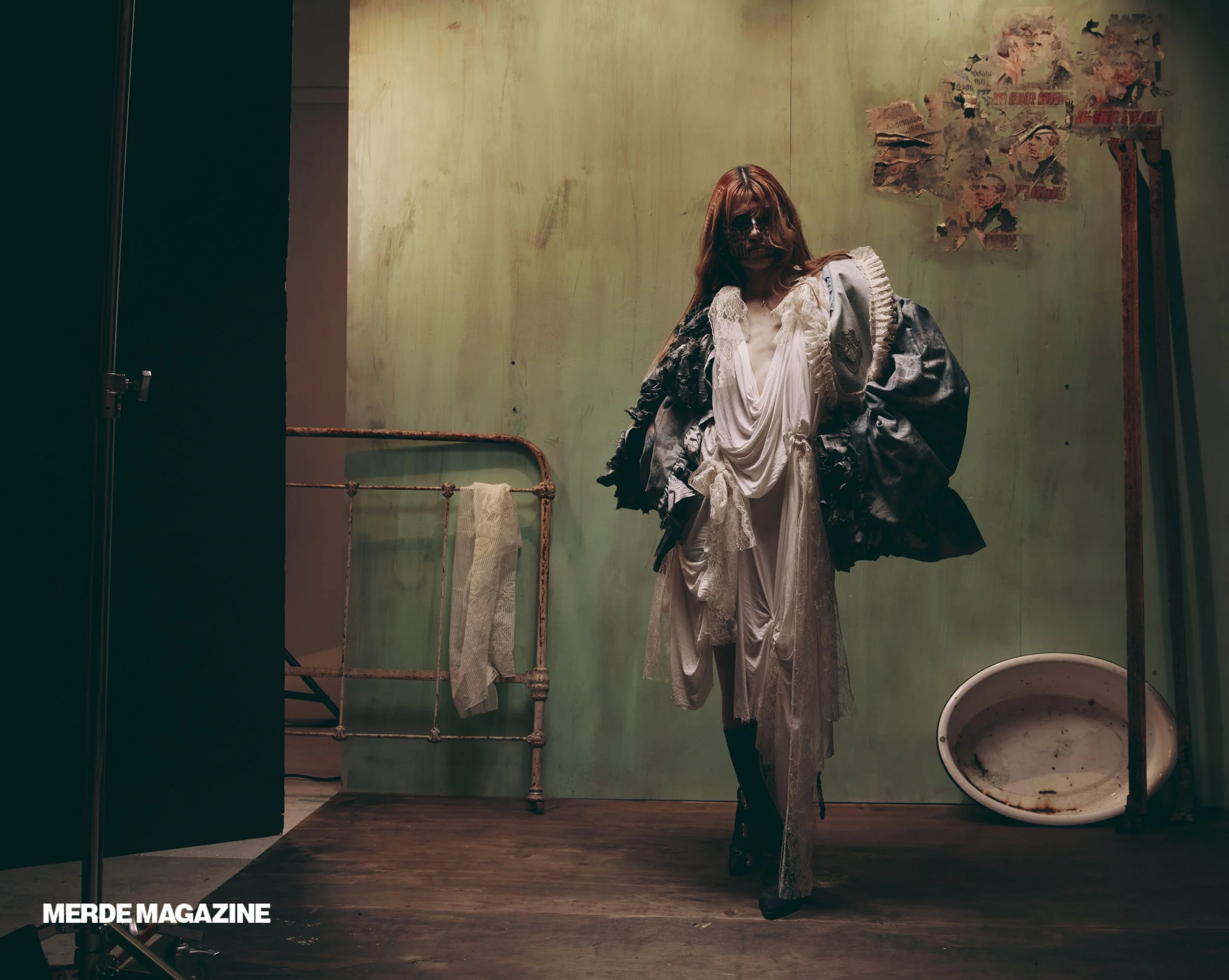
Clothing by: Elisabed Amiredjibi @lzvettta
Photo and set: Oliver Leon
Hair Artist: Dakota
Makeup Artist: Qeto Chantadze
Production assistant: Makena
Models: @creams.creams@lizakharabadze
For Georgian designer Elisabed Amiredjibi, fashion is not separate from politics, it is politics. In her collection Fight or Flight, clothing becomes both archive and protest, tracing the tension between cultural preservation and political unrest in modern Georgia. Drawing from graffiti-covered walls in Tbilisi, traditional Georgian dress, Soviet symbolism, and literary references like The Knight in the Panther’s Skin, Amiredjibi transforms garments into acts of resistance.
At the center of the work is a question many young Georgians are being forced to confront: stay and fight for change, or leave home behind. As Georgia faces increasing political instability under the pro-Russian ruling party Georgian Dream, youth are navigating the erosion of democratic agency while trying to preserve the cultural identity that has survived centuries of occupation and attempted erasure.

Through satire, sharp symbolism, and deeply personal references, Fight or Flight captures the emotional and political reality of a generation caught between hope and exile. For Amiredjibi, preservation itself becomes protest, and every garment carries the weight of what is at stake.
Amiredjibi notes that ‘Look 5 “Pioneer Kobakhidze” is meant to represent our regression back into Soviet times. This hat is meant to mimic the infamously unkempt hairstyle of Prime Minister Irakli Kobakhidze, while the look itself draws from Soviet school uniforms. Red elements are incorporated as a reference to Soviet Pioneers, children who were part of the Communist youth organization during the USSR and wore red scarves tied around their necks; a symbol of early ideological indoctrination.’
‘Cultural preservation is central to this project. Coming from a 2,500-year-old nation whose territory has long been contested by larger foreign powers and subjected to cultural erasure, I see preservation as a form of resistance.’
“I believe our enduring artistic and literary expression reflects a history of survival despite continuous infringements on our sovereignty.”
From a more contemporary lens, she ‘creates fabric prints of images that friends have sent me from Tbilisi, capturing graffiti tags across my hometown. Graffiti is one of the most interesting forms of protest. It is raw, accessible, and public. The city itself becomes the canvas for the voices that the government aims to silence. As political tensions rise, so does the presence of street art. For me, these markings are artifacts, relics I seek to imprint into my work and preserve.’