What Makes An Indian Baddie?
(And Why It Has Nothing To Do With How She Looks)
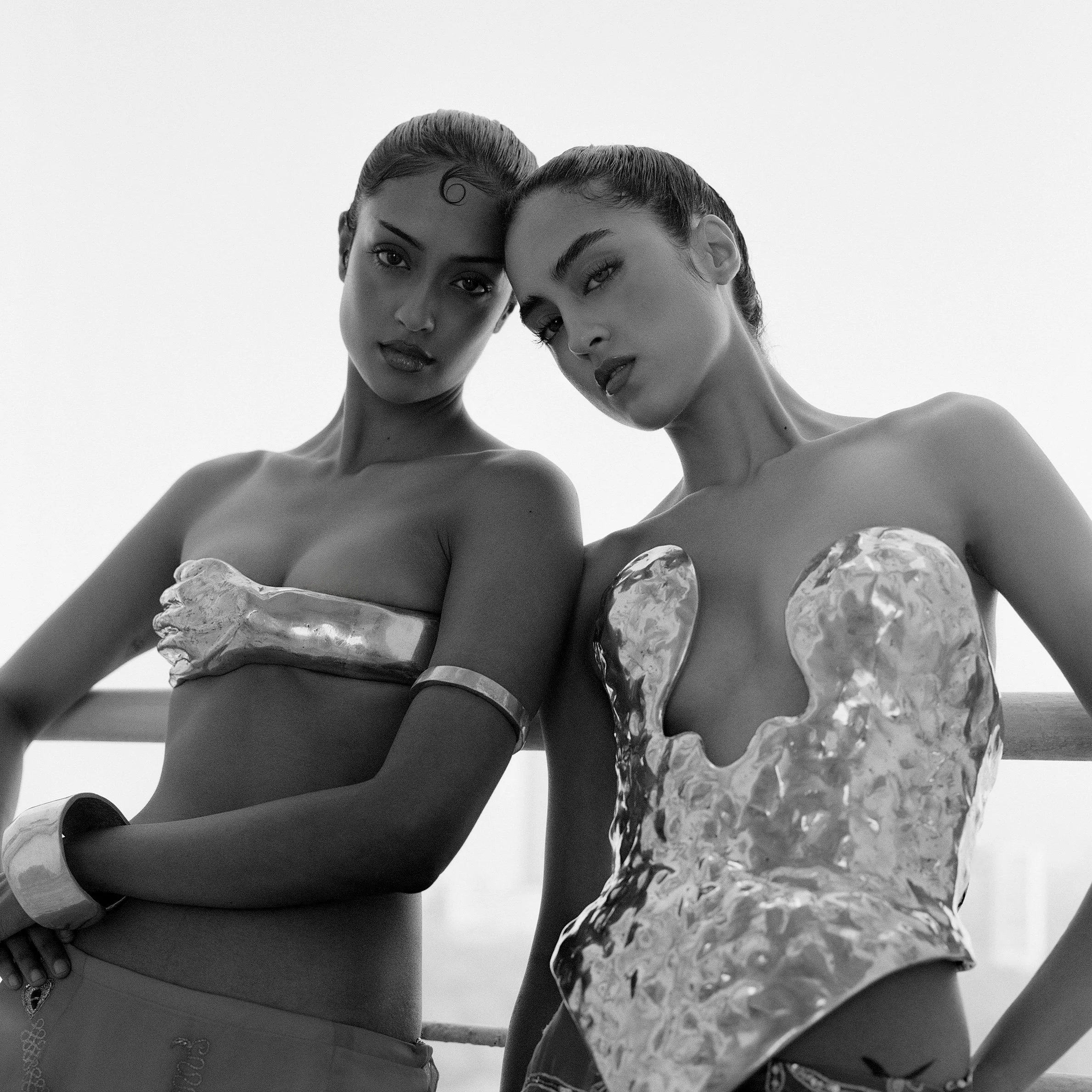
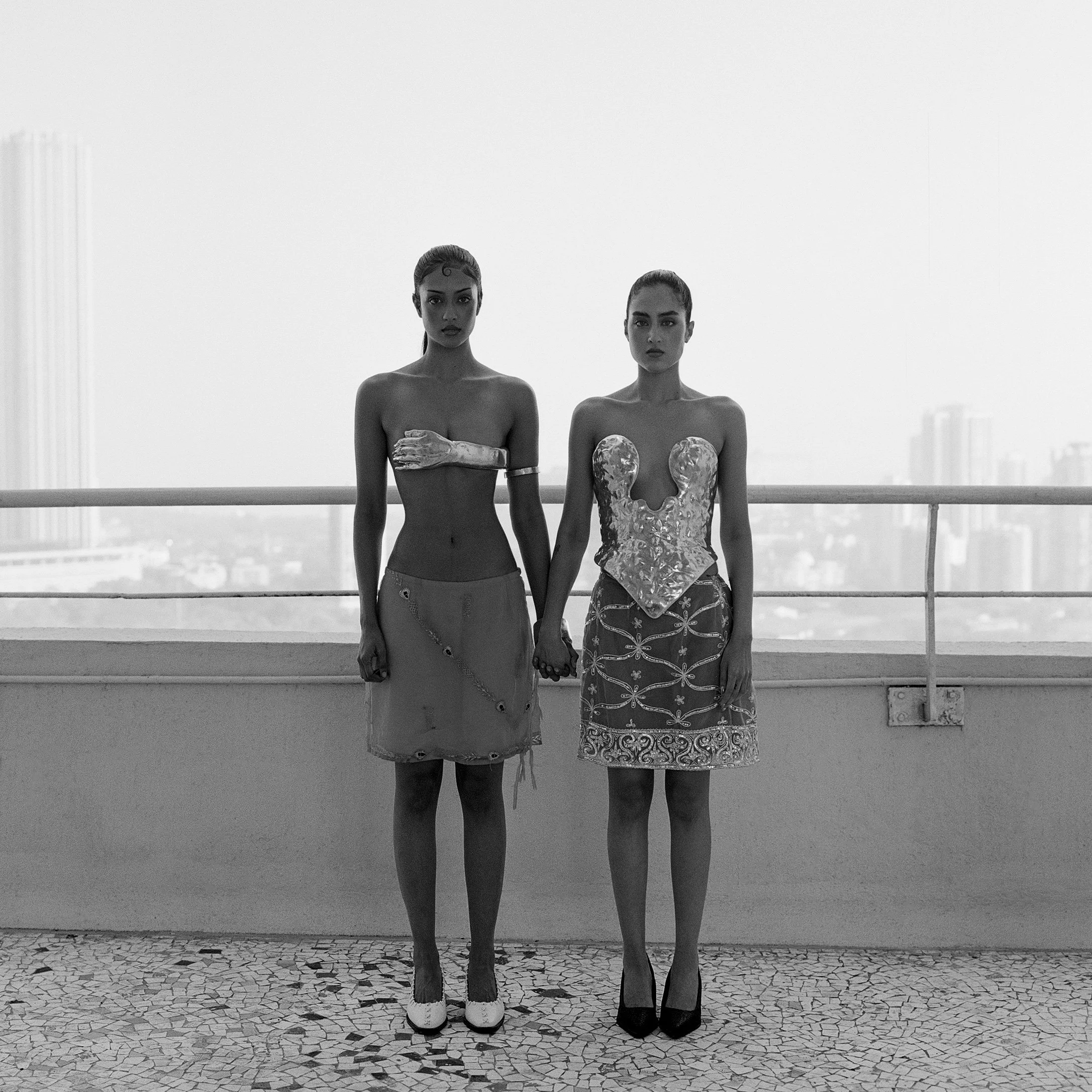
Photography, Creative Direction and Words by India Bharadwaj featuring Akshara & Subiksha Shivakumar
Styling: Anmol Venkatesh, Makeup: Dipannita Halder, Hair: Vidhi Ostwal
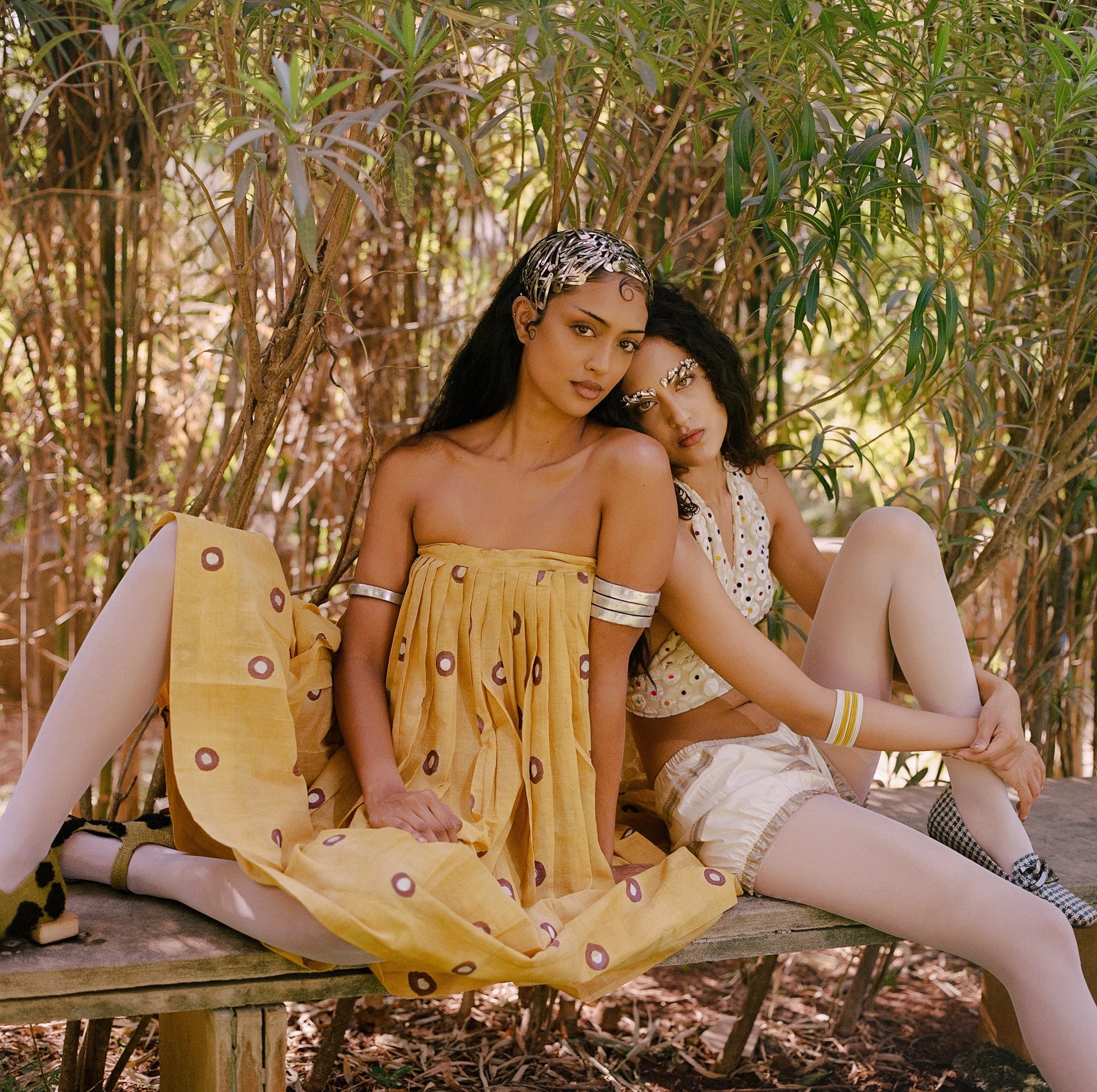
I’ve never met an Indian woman who’s not a baddie. From our mothers swiping kajal on their waterlines each morning, to our grandmothers commanding every room they step into—being a brown baddie is less like a label and more like a legacy. A generational glow-up passed down with natural skincare practices, adornments to feel the most confident we can, and beauty informed by community rather than consumerism.
So when did we start believing we need permission to look like ourselves?
In Mumbai, I always noticed how beauty doesn’t arrive alone. It travels in pairs, trios, entire family albums. I noticed how the shade of my friend’s bangles exactly matched her bindi, down to the glittering silver flecks in both. She told me she shared her passion for detail with her mother—how they’d discuss complementary vs. contrasting colours for hours, and which one made them feel like they’d stepped out of their very own magazine cover. On a Sunday stroll, I noticed how radiant our local fruit seller looked when she laughed, and when I asked what she used on her skin, she told me it was her favourite aunty’s besan* and rosewater face mask recipe—no branding or chemicals, just lineage in a bowl. Now her twin daughters use it too.
And then there was my grandmother, a woman who could turn a simple instruction into a life philosophy. “Shoulders back. Head high. Own who you are.” At the time, I thought she was teaching me posture. Later, I realised she was teaching me presence. And when I finally walked—properly walked—into her circle of friends and sat down like I belonged there, I saw it: the joy dancing in her eyes that said, without words, “there she is.” Our household Michelangelo had carved a masterpiece from marble.
The more I noticed, the more I started to suspect that maybe the real beauty industry isn’t an industry at all. Maybe it’s something older, quieter. Something less interested in selling us a version of ourselves and more interested in reminding us we were never unfinished. Once you strip away the billion-pound promises, the “reverse aging breakthroughs,” and the ever-ascending ladder of impossible standards, what’s left feels almost radical in its simplicity. A kind of beauty that doesn’t ask you to become someone else, but only to honour the little version of yourself inside who yearns to feel unconditionally loved. And the question remains: what actually makes a baddie?
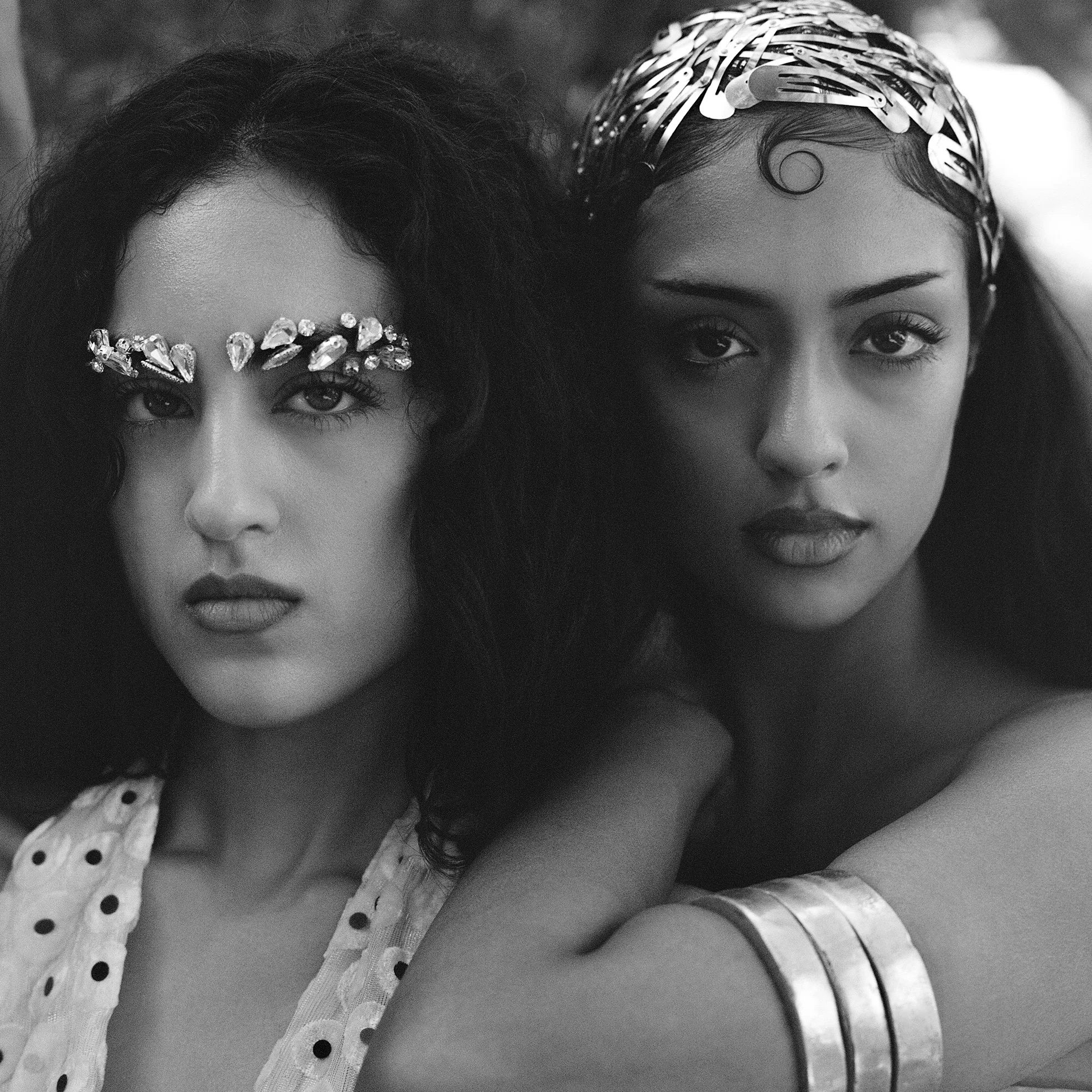
Subiksha and Akshara Shivakumar are at the heart of a long-overdue global reawakening to the depth and diversity of Indian beauty. The star-studded sisters are walking proof that confidence can be inherited, curated, and completely self-authored all at once. They’ve appeared everywhere from Sprite billboards to Amit Aggarwal editorials, from Honey Singh music videos to Lakmé Fashion Week runways for Aisha Rao, all with authenticity at the very core of their confidence. The Shivakumars have come to embody the growing global conversation around Indian beauty, earning the title of the Indian Baddies and sharing their gospel—it has always been about becoming more you. I sat down with Subiksha and Akshara to explore their perspectives on beauty and to understand how their community and relationship with each other have shaped the confidence we all continue to fall in love with through our screens.
How have you found your own idea of beauty?
Subiksha: I think my idea of beauty came from unlearning what I was taught to admire. Over time, I realised it’s not about perfection—it’s about individuality, presence, and honesty. The people I find truly beautiful are the ones who feel real and unapologetically themselves. To me, beauty isn’t a standard; it’s a perspective.
Akshara: My idea of beauty has shifted over time and will keep shifting. I think beauty is when I’m as bare as I can be, but also when I use everything at my access to decorate myself in my truest energy. Beauty is about my difference, not my adherence. It’s more about tuning in to yourself and what is special about you.
What was your earliest memory of feeling beautiful?
Subiksha: I think it was when I had just moved to India and my mom draped me in a saree for the first time. I remember feeling like a princess.
Akshara: Birth. But also, my 5th grade stage performance on Independence Day. I wore a princess dress, did a cute curly hairstyle, some lip gloss, and felt like a pop star.
How did your family pass down beauty secrets, and what’s one you still stick to?
Subiksha: Every Saturday, Mom would heat gingelly oil with a little pepper and rice and apply that to our hair and skin. Then she would mix besan* with milk and use it as a scrub to wash off the oil!
Akshara: My mom always jokes that she doesn’t have to do anything to look beautiful. I think it’s her confidence—that’s what beauty is about.
How has your relationship with each other informed your sense of beauty and/or confidence?
Subiksha: Growing up with my sister shaped my sense of beauty in the most grounding way. We’ve seen each other at every stage before the world had opinions, and that creates a kind of honesty you can’t fake. She’s always reminded me that confidence isn’t about perfection—it’s about being fully yourself. Having that mirror of unconditional support made me feel secure enough to define beauty on my own terms.
Akshara: As a younger sibling of what I’d call a pioneer of expression in India, my sense of beauty has come from learning that it’s not about coming clean—it’s about playing. And I’ve learned that I feel the most beautiful when I shock rather than fit in.
What does being a baddie mean to you?
Subiksha: To me, being a baddie isn’t about how you look—it’s about how you carry yourself. It’s confidence, self-awareness, and not shrinking to make others comfortable. It’s knowing who you are, owning it unapologetically, and not needing validation to feel powerful.
Akshara: When you know, you know. And when you know yourself enough and know that every part of you makes sense and is worth being shared, you are a baddie. You can be a happy baddie, a kitsch baddie, a bad bitch baddie—as long as you know.
*chickpea flour
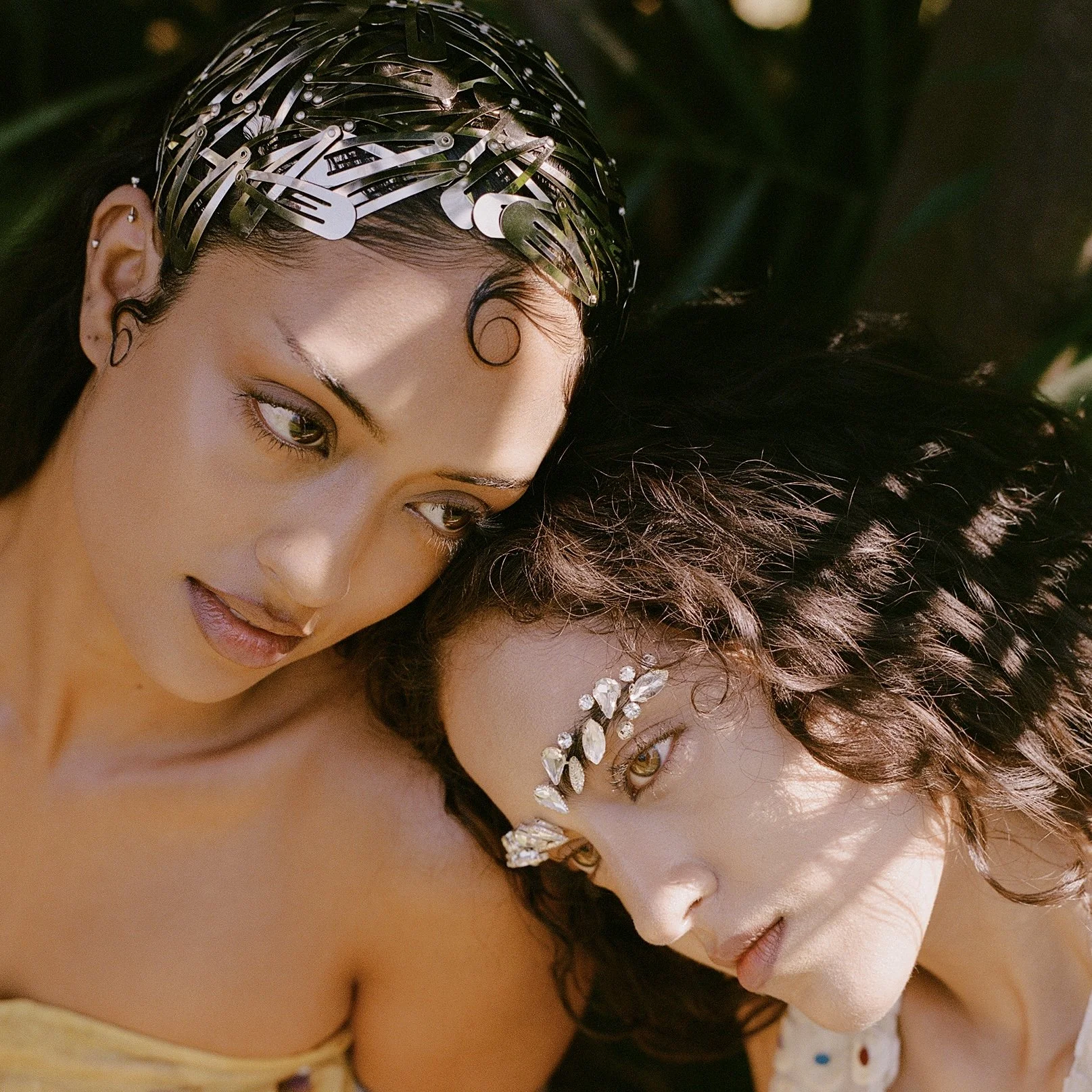
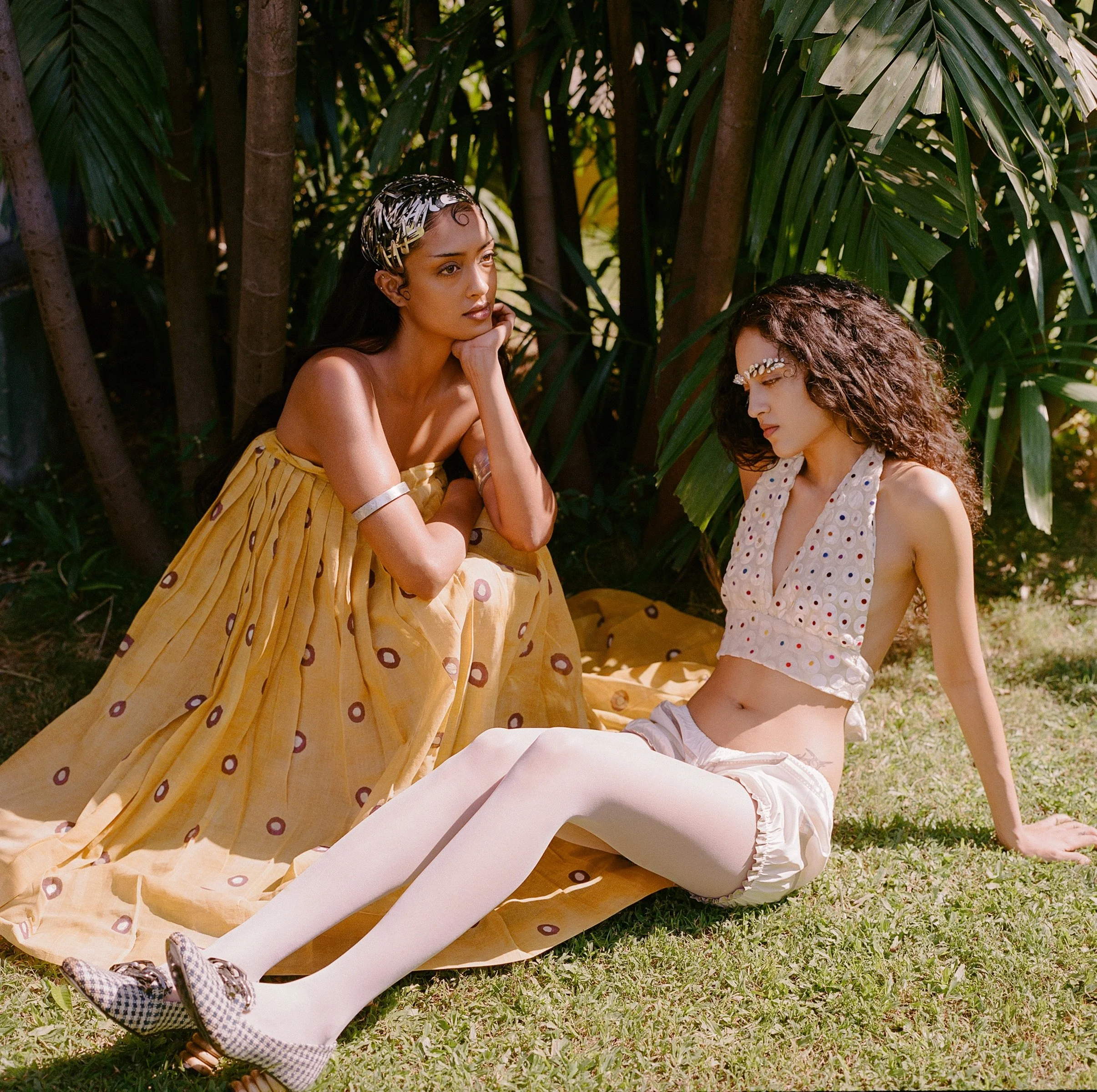
Dotty Bralette featuring embroidered bindis: Collaboration between Stylist and Anya Wahi @anyawahi, Pierrot Bloomers: Anya Wahi (both made in Bangalore)
Handwoven, hand-painted petticoat styled as a dress — Sarasa Textiles @sarasatextiles (made in Venkatagiri, Andhra Pradesh)
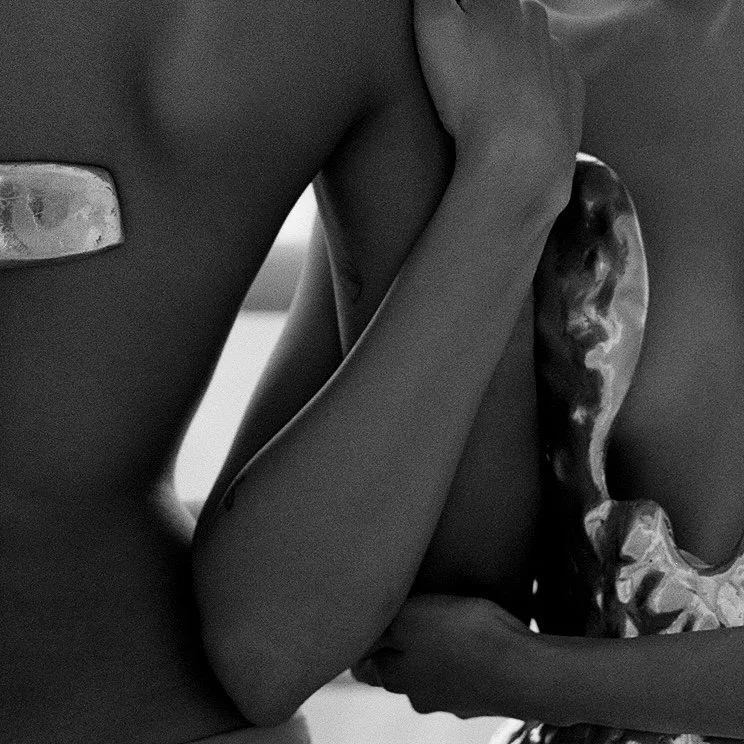
Sculptural metal corsets and jewelry: Charu Bhasin @bhasin_charu
Skirts crafted from repurposed Sarees: Laturia Shop @laturiashop (Jaipur)
Ethical vegan footwear: Disobedience Chennai @disobediencechennai